Tag: fam

FAM Executive Committee Resignation: What It Means for Negeri Sembilan FC and Malaysian Football

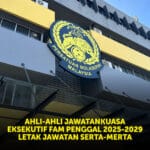
The Football Association of Malaysia (FAM) has officially announced that all members of its Executive Committee for the 2025–2029 term have collectively and voluntarily stepped down with immediate effect. The decision was made unanimously, framed as a principled and responsible move to safeguard the integrity, credibility, and long-term interests of Malaysian football.

In its statement, FAM emphasised that the resignation was not driven by personal interest or positions of power, but by organisational accountability amid circumstances that have drawn significant public attention. The move is intended to protect institutional integrity, reinforce good governance, and provide a transparent pathway for external assessment by global and regional football authorities.

A Governance Reset at National Level

According to FAM, the collective resignation serves several key objectives:

  • Preserving the reputation and interests of Malaysian football as a whole
  • Upholding principles of accountability and good governance during a sensitive period
  • Allowing FIFA and the Asian Football Confederation (AFC) the space to independently assess, review, and if necessary, intervene on matters related to governance and administration
  • Ensuring any reforms or corrective measures can be implemented without conflict of interest or public perception issues
  • Restoring confidence among stakeholders, partners, supporters, and the wider football community

Despite stepping down, former Executive Committee members have reiterated their commitment to fully cooperate with FIFA, AFC, and all relevant stakeholders, prioritising the long-term future of Malaysian football over individual mandates.

Implications for Negeri Sembilan FC

For clubs such as Negeri Sembilan FC, the announcement is expected to translate into administrative continuity rather than disruption in the short term.

From an operational perspective:

  • Competitions, licensing, and match calendars are expected to proceed as scheduled under existing frameworks governed by FIFA and AFC regulations.
  • Club autonomy remains intact, with Negeri Sembilan FC continuing to operate under its own professional management structure, technical planning, and commercial strategy.
  • Regulatory clarity and reform, should it emerge from this process, may ultimately benefit clubs through stronger governance standards, clearer compliance mechanisms, and enhanced institutional credibility at national level.

For Negeri Sembilan FC specifically, the situation underscores the importance of the club’s ongoing emphasis on professionalism, long-term planning, and internal governance—values that align closely with the principles highlighted in FAM’s announcement. The club’s continued investment in infrastructure, youth development, coaching education, and high-performance standards positions it well regardless of changes at the national administrative level.

Looking Ahead

While the immediate focus at national level will be on governance review and institutional stability, the broader football ecosystem—including clubs, players, officials, and supporters—stands to benefit from a process that prioritises transparency and trust.

For Negeri Sembilan FC, the message is clear: football operations continue, long-term development remains the priority, and the club’s commitment to sustainable growth and professionalism will remain unchanged. As Malaysian football enters this transitional phase, stability at club level will be a crucial pillar in ensuring the game continues to progress on and off the pitch.

Negeri Sembilan FC fans will continue to monitor developments closely and remain aligned with all directives from the relevant authorities, with the best interests of the club, its supporters, and Malaysian football at heart.

Inside FIFA’s Case Against FAM: What the Independent Investigation Reveals

Below is a detailed summary of the Report of the Independent Investigation Committee (IIC) of the Football Association of Malaysia (FAM) on FIFA’s Case against FAM and Seven Malaysian National Team Players.

1. Background & Purpose of the Investigation

  • On 27 October 2025, FAM appointed Tun Md Raus Sharif, former Chief Justice of Malaysia, as Chairman of an Independent Investigation Committee (IIC).
  • The IIC’s mandate was to investigate FIFA’s disciplinary case involving:
    • FAM, and
    • Seven naturalised players who represented Malaysia.
  • The investigation focused on whether forged or falsified documents were used in FIFA eligibility proceedings.

2. FIFA’s Case Against FAM and the Seven Players

Legal Basis

  • FIFA charged FAM and the players under Article 22 of the FIFA Disciplinary Code 2025, which criminalises:
    • Forging documents,
    • Falsifying authentic documents, or
    • Using forged/falsified documents in football-related matters.

The Seven Players

  • The players were foreign-born (Spain, Argentina, Brazil, Netherlands).
  • They represented Malaysia after obtaining Malaysian citizenship through naturalisation.

3. Timeline of Key Events

  1. Early 2025
    • FAM submitted documents to FIFA via the FIFA Legal Portal to confirm player eligibility.
    • Documents included:
      • Passports,
      • Malaysian citizenship documents,
      • Grandparents’ birth certificates allegedly showing birth in Malaysia,
      • Declarations that players had not represented other national teams.
  2. March–June 2025
    • FIFA responded (27 March, 6 June, 9 June 2025) that the players appeared eligible based on submitted documents.
  3. 10 June 2025
    • All seven players played against Vietnam in the AFC Asian Cup 2027 Qualifiers.
    • Two of the players scored.
  4. 11 June 2025
    • FIFA received a formal complaint questioning the legitimacy of the players’ eligibility.
  5. FIFA Investigation
    • FIFA obtained original birth records of the players’ grandparents.
    • These records contradicted the documents submitted by FAM.

4. Core Findings of FIFA

  • The birthplace information of the grandparents submitted by FAM was false.
  • FIFA concluded:
    • The documents were forged or falsified.
    • The documents were used to circumvent FIFA eligibility rules.
  • Under Article 22(2), FAM was held liable for acts committed by officials or players.

5. FIFA Disciplinary Decision (25 September 2025)

  • FIFA found FAM and all seven players guilty of breaching Article 22.
  • Sanctions imposed:
    • FAM fined CHF 350,000 (CHF 50,000 per player; ≈ RM1.8 million).
    • Match bans and further sanctions imposed on players (per FIFA code).

6. Malaysian Government’s Position on Citizenship

Key Clarifications by the Minister of Home Affairs

  • The seven players:
    • Were lawfully granted Malaysian citizenship under Article 19(2) of the Federal Constitution.
    • Met all legal and constitutional requirements.
  • Documents issued by National Registration Department (NRD) were:
    • Authentic,
    • Not forged,
    • Not part of FIFA’s allegations.

Critical Legal Distinction

  • Citizenship ≠ FIFA eligibility
    • Citizenship is governed by Malaysian sovereign law.
    • Eligibility to represent Malaysia is governed solely by FIFA regulations.

7. IIC’s Position on Citizenship

  • The IIC did not and could not challenge citizenship decisions:
    • Citizenship matters fall exclusively under Malaysian courts and the Federal Government.
  • The IIC confirmed:
    • The players are legally Malaysian citizens.
    • Citizenship alone does not guarantee eligibility to play for the national team.

8. The Forged Documents Issue (Central Problem)

FIFA Eligibility Rule (Article 7)

To represent a country, a player must show at least one genuine link:

  • Birth in the country, or
  • Parent born in the country, or
  • Grandparent born in the country, or
  • Long-term residence.

What Went Wrong

  • The seven players relied on grandparents’ birth certificates.
  • Documents submitted by FAM stated grandparents were born in:
    • Malacca, Penang, Johor, Kuching, etc.
  • FIFA’s investigation proved grandparents were actually born in:
    • Spain, Argentina, Brazil, Netherlands.

➡ This contradiction formed the basis of FIFA’s forgery charge.

9. Responsibility & Evidence Assessment

FAM Administration

  • Legal Manager (Zainul Ariffin):
    • Uploaded documents to FIFA.
    • Acted on instructions of the General Secretary.
  • General Secretary (Datuk Noor Azman):
    • Admitted FAM staff handled and formatted documents.
    • Acknowledged lack of proper verification.
    • Retained ultimate administrative responsibility.

National Team Setup (MNFTS)

  • Led by Rob Friend (CEO).
  • Claimed documents came from players’ agents.
  • No evidence of direct involvement in forgery.

Players

  • All seven players stated:
    • Agents handled documentation.
    • They relied entirely on FAM and agents.
    • They were not aware of document falsification.

Critical Gaps

  • Players’ agents did not cooperate.
  • Notary Public (Lee Lin Jee) who certified documents:
    • Failed to appear,
    • Could not be questioned on authenticity.

➡ As a result, the IIC could not conclusively identify who forged the documents.

10. Key Conclusions of the IIC

  • Forgery did occur, as confirmed by FIFA.
  • The exact perpetrator could not be identified due to:
    • Non-cooperation of agents,
    • Absence of the Notary Public.
  • There were serious failures in governance, oversight, and due diligence within FAM.

11. IIC Recommendations

1. Criminal Investigation

  • FAM should immediately lodge a police report.
  • Forgery is a criminal offence under Malaysian law.

2. Disciplinary Action

  • FAM Disciplinary Committee should initiate proceedings against:
    • General Secretary, for failure of oversight and due diligence.
  • This does not automatically imply criminal guilt, but administrative accountability.

3. Governance Reforms

The IIC strongly recommends:

  • Stronger document verification systems.
  • Clear responsibility lines.
  • Mandatory agent registration and accountability.
  • Vetted notaries only.
  • Regular audits on eligibility documentation.
  • Ethics and integrity training.
  • Formal cooperation with law enforcement and FIFA integrity units.

12. Overall Significance

  • This case is not about illegal citizenship.
  • It is about:
    • Administrative failure,
    • Document integrity,
    • Governance breakdown within FAM.
  • The IIC recommends the report be made public, given its importance to national football integrity.

Cklamovski’s Praise for TMJ Walks a Fine Line — Support or Breach of FIFA’s Neutrality Principles?

Harimau Malaya head coach Peter Cklamovski made headlines after Malaysia’s 3-0 win over Laos when he openly credited Johor Regent Tunku Ismail Sultan Ibrahim as the driving force behind Malaysian football’s progress.

In a passionate post-match statement, Cklamovski said that without the Johor Darul Ta’zim (JDT) owner’s vision, leadership, and personal investment, Malaysian football “would have been finished a long time ago.”

He further argued that Tunku Ismail, not the Football Association of Malaysia (FAM), has been the key figure securing government backing, funding, and professional standards that have elevated the national team setup.

That’s a very sharp and politically loaded statement by Peter Cklamovski — and while not directly illegal under FIFA regulations, it pushes into a grey area concerning FIFA’s principles of neutrality and non-interference in political or administrative affairs of member associations.

Let’s unpack it carefully from both a regulatory and a professional conduct standpoint:

1. FIFA’s Stance: Political Neutrality & Non-Interference

FIFA’s Statutes (notably Articles 14 & 19) emphasize that:

  • Member associations (like FAM) must remain independent and free from political interference.
  • National teams, clubs, and officials must not bring political figures, governments, or royalty into football governance matters.

Cklamovski’s comments—especially:

“Who gets the funding from the Prime Minister and the support from the government? It is TMJ, not FAM,”
“Without him, Malaysian football is finished.”

—could be interpreted as endorsing political or monarchical influence over a national association, which contradicts the spirit (if not the letter) of FIFA’s autonomy rules.

However, since TMJ’s involvement is through a club (JDT) and as a royal patron, not a government minister or FIFA-sanctioned official, the comments may not trigger a direct disciplinary breach—unless FIFA deems them evidence of political control or interference.

2. From a Coaching & Governance Perspective

It’s unusual for a national team coach to:

  • Publicly assign blame to FAM (“the administration errors … that’s FAM, not TMJ”), and
  • Explicitly credit a single private or royal figure for national football survival.

This can:

  • Undermine the federation’s credibility before FIFA and AFC.
  • Create perception of dual power structures — one official (FAM) and one de facto (TMJ).
  • Risk breaching FIFA Code of Ethics, Article 13 (General Duties), which requires officials to act with neutrality, integrity, and loyalty to their member association.

So while not an immediate FIFA violation, it could be viewed as “inappropriate public commentary” or “disparagement of a member association”, which national FAs often discipline internally.

3. Contextual Reality: Why He Said It

Cklamovski’s statement came amid:

  • The FIFA suspension of Malaysia due to falsified player documents.
  • Rising public anger towards FAM.
  • TMJ’s visible role as de facto national team project leader.

It seems defensive and political — an attempt to rally morale and publicly separate TMJ from FAM’s scandal. Strategically, it shifts blame away from TMJ and towards FAM administration, protecting his employer’s key supporter.

4. What FIFA Could Do

Unless:

  • The statement is interpreted as proof that the government or TMJ controls FAM decisions, or
  • It sparks further evidence of undue influence,

FIFA will likely not act. However, they will take note, especially given Malaysia’s ongoing suspension and governance scrutiny.

If FIFA or AFC perceive TMJ as exercising authority exceeding his role, they could ask FAM for clarification on independence and structure.

Summary Judgment

AspectAssessment
FIFA Rule Breach?Not directly — but borderline on political interference (Articles 14, 19).
Professional Conduct?Questionable — public criticism of FAM by national coach is unorthodox and potentially divisive.
Possible Consequences?Internal reprimand or advisory from FAM; FIFA likely to monitor but not sanction unless interference proven.
Motivation Behind StatementTo defend TMJ’s role and rally support during crisis; politically tactical, not regulatory in nature.

In short:
Cklamovski’s statement isn’t an outright FIFA violation, but it’s walking a fine line. It blurs institutional boundaries, risks reputational damage to FAM, and could invite further scrutiny over governance independence — something FIFA takes very seriously.