
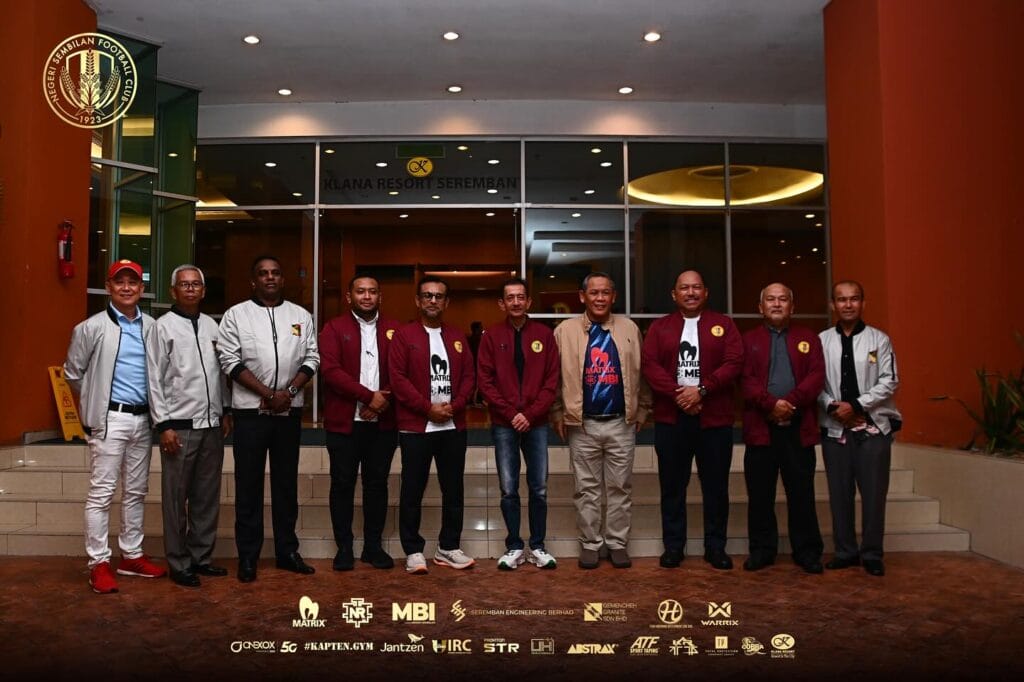
Negeri Sembilan is set to take a significant step forward in football development with the introduction of the Liga Premier Negeri Sembilan (LPNS), scheduled to begin in March 2026. The initiative, announced by Faliq Firdaus, Chief Executive Officer of Negeri Sembilan FC, reflects a long-term commitment to building a sustainable and structured football ecosystem in the state.
According to Faliq, the league has already attracted interest from nearly 27 teams, despite the organisers initially targeting a maximum of 20 participating sides. The strong response highlights the demand for a structured competitive platform at the semi-professional and amateur levels within Negeri Sembilan.
A Flagship A3-Level Tournament
LPNS will be conducted as an A3-tier league over a three-month period, with matches hosted at the PBNS Training Centre in Rahang, Seremban. The league is supported by the Negeri Sembilan Youth and Sports Development Office, reinforcing the state government’s role in grassroots football advancement.
Importantly, LPNS is positioned as the flagship tournament under the Negeri Sembilan Football Association, or Persatuan Bolasepak Negeri Sembilan (PBNS), serving as a central development platform beneath the state’s professional setup.
Clear Division of Roles: NSFC and PBNS
Faliq explained that Negeri Sembilan FC and PBNS have reached a clear mutual understanding in their respective roles within the state football structure.
- Negeri Sembilan FC will focus on elite talent identification and development, guiding players toward the professional level, including the Malaysia Super League.
- PBNS, meanwhile, will concentrate on grassroots organisation, competition management, and long-term development programmes, beginning in 2026.
This structured separation ensures that development pathways are clearly defined, avoiding overlap while strengthening the overall football ecosystem.
Broadcast, Commercial Value and Spillover Effects
LPNS matches will be broadcast live via Pay-Per-View through NSFC Development, providing visibility not only for teams and players but also for sponsors, scouts, and stakeholders.
Faliq highlighted the spillover effects of running a structured league annually, particularly in attracting investment, improving player standards, and stimulating football-related economic activity at the local level.
Opening Global Pathways for Young Talent
One of the league’s most forward-looking proposals is the potential allowance for each team to register one import player aged 18–23. This initiative could:
- Open Negeri Sembilan to the global youth football market
- Encourage colleges and universities to offer combined academic scholarships and football opportunities
- Provide affordable import options for local clubs, which NSFC could later scout and develop further
This model mirrors successful development ecosystems seen in other footballing regions.
Education, Licensing and Player Mobility
All LPNS teams will receive education on FAM’s MyPAS system, ensuring that every registered player holds a formal player licence. With proper licensing in place:
- Player transfers can occur legitimately where applicable
- Clubs can operate within amateur, semi-professional, or professional frameworks
- Player value and mobility are formally recognised within the system
The initiative aims to professionalise football operations even at the amateur level.
Building the Bridge to Higher Leagues
Faliq emphasised that platforms must exist at the amateur level to allow more semi-professional and professional clubs to emerge from Negeri Sembilan. LPNS is designed as a development bridge to A3, A2 and A1 leagues, with future possibilities including Malaysia Super League clubs loaning players into lower tiers for competitive development.
“PBNS organises, NSFC supports,” Faliq stressed, adding that state football development should be driven by the association, not by individuals or external parties.
A Long-Term Football Ecosystem
Ultimately, the Liga Premier Negeri Sembilan is more than just a competition. It is a strategic ecosystem—one that connects grassroots football, education, international exposure, player licensing, and professional progression under a unified structure.
As Faliq concluded succinctly: “It’s an ecosystem.”