
Category: Football

Opponent Analysis: Selangor FC Home Season 2025/2026

Selangor FC have had a mixed start to their 2025/26 campaign, with results that highlight both their potential and their limitations. From a humbling defeat against Johor Darul Ta’zim (JDT), to a convincing Super League victory over Brunei DPMM, and a professional job against Malaysia University in the FA Cup, the Red Giants are revealing a tactical identity that thrives against mid-tier opponents but still falters against the nation’s elite.

This analysis looks at Selangor’s performances across the three matches to evaluate their strengths, weaknesses, and future prospects.

Tactical Identity

Formation and Shape

Selangor’s base system is a 5-4-1, which transforms into a 3-4-3 when attacking. Wingbacks are central to this philosophy – providing width, stretching defenses, and creating overloads. When they dominate the flanks, Selangor’s attack flows. When pinned back, as against JDT, the team looks toothless.

Style of Play

  • Attacking through wide overloads: Faisal Halim, K. Deeromram, and Q. Cheng are the primary outlets.
  • Early goals as a weapon: Against DPMM and Malaysia University, Selangor scored within the first 5 minutes, instantly tilting the tactical battle in their favor.
  • Possession dominance against weaker sides: 68% against Malaysia University, 55% against DPMM. But against JDT, they were suffocated, managing only 28%.

Match-by-Match Performance

1. Johor Darul Ta’zim 3–0 Selangor (Super League, 8 Aug)

  • Possession: JDT 72% – Selangor 28%
  • xG: JDT 2.85 – Selangor 0.29
  • Box touches: JDT 38 – Selangor 6

Selangor were simply outclassed. Their 5-4-1 sat too deep, producing zero tackles, only 173 passes, and leaving striker Chrigor isolated. The gulf in class was clear: JDT controlled territory, forced errors, and dismantled Selangor’s structure.

2. Selangor 3–0 Brunei DPMM (Super League, 12 Aug)

  • Possession: Selangor 55% – DPMM 45%
  • xG: Selangor 4.33 – DPMM 0.98
  • Box touches: Selangor 44 – DPMM 9

This was a complete turnaround. K. Deeromram struck twice from wingback, while Chrigor added the third. The wide channels were key – Selangor effectively attacked with a 3-4-3, their wingbacks functioning as wingers. They created 23 shots, 20 inside the box, showing their ability to dominate weaker defenses.

3. Malaysia University 1–3 Selangor (FA Cup, 16 Aug)

  • Possession: Selangor 68% – MU 32%
  • xG: Selangor 2.52 – MU 0.40
  • Box touches: Selangor 29 – MU 5

A professional cup performance. Faisal Halim was the star, scoring twice and earning a 9.4 rating. Fortes also found the net, benefiting from Selangor’s overwhelming control. Despite the dominance, lapses in concentration allowed a late consolation goal, exposing defensive complacency that remains a concern.

Strengths

  1. Wingback Power – Deeromram and Cheng provide both goals and creativity, while Faisal Halim is the team’s X-factor on the flanks.
  2. Early-Goal Mentality – Quick strikes against DPMM and Malaysia Uni broke opponents’ game plans and allowed Selangor to dictate tempo.
  3. Dominance vs Mid-Lower Tier – When facing less organized teams, Selangor impose possession, create volume (20–30 touches in the box), and finish clinically.
  4. Squad Depth in Attack – With Halim, Fortes, Chrigor, and Clough, they have multiple goal contributors.

Weaknesses

  1. Vulnerability vs Elite Pressing
    • Against JDT, Selangor collapsed under pressure, unable to progress the ball.
    • Midfield trio (Clough, Laine, Rawabdeh) lacks bite and mobility in high-intensity matches.
  2. Defensive Passivity
    • Extremely low tackle numbers (0 vs JDT, 1 vs Malaysia Uni).
    • Over-reliant on interceptions and clearances, rarely proactive in winning the ball.
  3. Duel Fragility
    • Ground duel success as low as 29% vs Malaysia Uni.
    • Aerial duel success only 23% in that same game.
    • Physical teams can outmuscle Selangor.
  4. Reliance on Early Goals
    • Their best wins came after early strikes.
    • When unable to score early (e.g., vs JDT), their system collapses into sterile possession.

Bigger Context

Selangor’s identity is becoming clearer:

  • Against mid-table or weaker sides → they dominate, overwhelm, and win comfortably.
  • Against elite sides like JDT → their tactical flaws are exposed, showing a gap in class and structure.

The FA Cup win shows maturity and professionalism, but the JDT defeat reminds everyone of the work still needed to challenge for titles.

Conclusion:

Selangor FC are strong enough to secure consistent league points and progress in the FA Cup. Their reliance on wing play and early goals makes them dangerous, but their passivity in duels and defensive lapses leave them vulnerable against top-level opposition.

Hobin Jang Hobin Chant

Dari sawah turun padang
Kini kau dah pandai nondang
Kali ini mesti monang
Bukan susah cukup sonang

Hoben jang hoben
hoben jang hoben
hoben jang hoben
hoben jang hoben

1 – 0 kocik bonar
4-1 sonyum lebar
Kalau boleh 7 – 0,
Biar dio balik tolopong, tolopong-lopong

Hoben jang hoben
hoben jang hoben
hoben jang hoben
hoben jang hoben

Yam Tuan sokong kito
Montoghi Bosar sokong kito
Undang luak sokong kito
Jangan buek malu muko

Hoben jang hoben
hoben jang hoben
hoben jang hoben
hoben jang hoben

Sumbek gol banyak-banyak
Bia sampai jaring kuyak
Main mesti hati-hati
Jangan masuk gol sendighi..sendighi

Hoben jang hoben
hoben jang hoben
hoben jang hoben
hoben jang hoben

Luqman Hakim’s NSFC Debut on Hold, Eyes Set on Kuching City Clash

Negeri Sembilan FC’s (NSFC) fans will need to wait a little longer before witnessing the highly anticipated debut of national striker Luqman Hakim Shamsudin.

Head coach Mohd Nidzam Jamil confirmed that the 23-year-old forward, who recently returned from stints in Belgium, Iceland, and Japan, is unlikely to feature in the Super League showdown against Selangor FC this Sunday at Paroi.

“Not for Selangor. I think against Kuching (City), maybe he will be ready,” said Nidzam during the post-match press conference after NSFC’s emphatic 5-0 win over PDRM FC in the Piala FA.

Injury Delays and Fitness Recovery

Since joining NSFC, Luqman has yet to be listed either in the starting eleven or on the bench. The club previously confirmed he was sidelined by injury, preventing him from making his competitive debut.

According to Nidzam, Luqman is close to full fitness but still requires careful management to avoid setbacks. The clash against Kuching City FC on August 29 has been earmarked as the likeliest occasion for his long-awaited first appearance in Sang Rusa colours.

More Injury Concerns for NSFC

Luqman is not the only absentee for the Selangor fixture. Former Selangor FC defender Khuzaimi Piee is also ruled out with injury.

“Same with Jimmy (Khuzaimi), he won’t play against Selangor either. They both need around seven to ten more days, then we’ll assess their progress,” Nidzam explained.

Additionally, Ghanaian midfielder Alex Agyarkwa, on loan from Selangor FC, will miss the match due to a “gentleman agreement” between both clubs, further limiting NSFC’s options in midfield.

Focus Shifts to Selangor Clash

Despite the absentees, Negeri Sembilan FC enter the Super League encounter on a high, fresh from their commanding Piala FA triumph. The spotlight now turns to how Nidzam reshuffles his squad to face his former club, Selangor FC, in a match that could be a true test of The Jang’s credentials this season.

For fans, all eyes will soon be on Luqman Hakim’s long-awaited debut—a moment that could arrive just days later when NSFC host Kuching City at Paroi.

Match Analysis: Negeri Sembilan FC vs PDRM FC Piala FA 2025/26 (Round of 16, First Leg)

A Statement Victory at Paroi

Negeri Sembilan FC (NSFC) delivered a dominant performance in their Piala FA Round of 16 opener, overwhelming PDRM FC 5–0 at the Stadium Tuanku Abdul Rahman, Paroi. Despite their opponents being reduced to 10 men as early as the 9th minute, the Jang’s quality, structure, and attacking intent suggested they would likely have secured a convincing result regardless of the numerical advantage.

The win extends NSFC’s remarkable scoring form—eight goals in their last two matches—showcasing the attacking philosophy that head coach Nidzam Jamil has instilled in just nine weeks of preparation. Nearly 4,500 supporters filled Paroi, further underlining the growing momentum and optimism surrounding the club.

Tactical Shape and Build-Up Play

From the outset, Negeri Sembilan operated with a back-four base in defense but morphed into a three-at-the-back shape in possession. Harith Samsuri shifted inward to form a left-sided centre-back role alongside Arif Ar-Rasyid and Luis Enrique, giving stability and flexibility in buildup.

On the flanks, Anwar Ibrahim alternated between tucking inside as an inverted full-back and pushing forward as an attacking outlet. This adaptability allowed NSFC to progress through multiple channels while maintaining defensive security.

Midfield Control – The Alex & Sasaki Axis

Midfield balance proved decisive. The import midfielder Wai Lin anchored play with defensive discipline, dropping deep when required to form a temporary back three. This freed Alex Agyarkwa to orchestrate as the creative hub, dictating tempo with incisive passing and intelligent combination play.

Ahead of them, captain Takumi Sasaki thrived as a free-roaming No. 10, linking with Alex to produce fluid attacking sequences. Their synergy made the middle third NSFC’s strongest sector, combining control with forward thrust.

Direct Running and Attacking Edge

On the flanks, Selvan stretched PDRM with pace, but it was winger Jovan Motika who stood out. His instinctive movement exploited gaps in PDRM’s defensive line, repeatedly timing his runs to perfection. While less effective in one-on-one duels, Motika’s direct running was a constant menace.

Up front, striker Joseph Esso provided the complete package—physical presence, clinical finishing, and unselfish link play. His ability to drop, dummy, or combine with Motika’s runs created multiple openings. Together, they formed a potent spearhead that dismantled PDRM’s defensive unit.

Substitutes and Impact

The introduction of Japanese forward Mio Tsuneyasu added further spark. His composed solo effort in the 74th minute capped a confident cameo, marking his arrival in Malaysian football with style.

With the tie virtually sealed, Negeri Sembilan continued to attack, displaying relentless intent rather than protecting their lead—a mentality that will please Nidzam Jamil and supporters alike.

PDRM’s Struggles

For PDRM, the early dismissal of Noel Agbre compounded their tactical vulnerabilities. Even before the red card, they struggled to cope with NSFC’s fluid build-up and midfield combinations. Their attempt to sit deeper and rely on set pieces proved ineffective, as lapses in discipline and cohesion were repeatedly punished.

Conclusion: A Rising Force

This emphatic result underlines Negeri Sembilan’s rise as a serious contender. With balanced midfield control, explosive wide options, and a reliable front line, the Sang Rusa have begun to showcase the hallmarks of a top-three challenger in Malaysian football.

The challenge now lies in maintaining consistency. A highly anticipated clash with Selangor FC awaits this weekend, offering the perfect test of whether Nidzam Jamil’s men can replicate their cup form in the league.

Final Score: Negeri Sembilan FC 5–0 PDRM FC

Negeri Sembilan Lead FA Cup Round of 16 Attendance Figures

The opening leg of the FA Cup Round of 16 delivered not only goals and drama on the pitch but also an encouraging show of support in the stands, with Negeri Sembilan FC (NSFC) setting the benchmark.

Paroi Tops the Chart

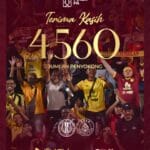
The clash between Negeri Sembilan FC and PDRM FC on 18 August at Stadium Tuanku Abdul Rahman, Paroi, recorded the highest attendance of the round with 4,560 fans. The home crowd were rewarded with a dazzling performance as the Jangs powered to a 5-0 victory, creating an electric atmosphere that underlined Paroi’s reputation as one of the liveliest venues in Malaysian football.

DPMM and JDT Follow Closely

Over in Bandar Seri Begawan, Brunei DPMM FC attracted 3,996 fans at Stadium Hassanal Bolkiah, as the hosts secured their first win of the season, edging Kuching City FC 3-2 in front of an animated home crowd.

Meanwhile, at Stadium Sultan Ibrahim, 3,957 spectators turned up to watch Johor Darul Ta’zim (JDT) in action. The reigning Super League champions made light work of UM-Damansara United, cruising to a 5-0 victory.

Strong Support Elsewhere

Melaka FC vs Penang FC at Stadium Hang Jebat drew 2,979 supporters, though the home side fell 0-2 to the Harimau Kumbang, with Dylan Wenzel-Halls on the scoresheet.

MUFT vs Selangor FC welcomed 1,772 fans to Stadium MBPJ, while Kelantan TRW vs KL City FC in Kota Bharu attracted 1,420 supporters. Both matches ended in victories for Selangor and TRW, respectively.

Lowest Turnout, Biggest Win

The lowest turnout was at Stadium Tuanku Abdul Rahman for the Bunga Raya FC vs Sabah FC fixture, with just 90 fans in attendance. Despite the small crowd, Sabah delivered the biggest margin of victory of the round, thrashing Bunga Raya 6-0.

Elsewhere, Imigresen FC vs Terengganu FC at Stadium Negeri, Batu Kawan, drew 410 fans, but ended in a shock as The Mighty Tigers stunned the Turtles with a 2-1 win.

Looking Ahead

The return legs of the FA Cup Round of 16 will be staged from 12 to 14 September 2025, promising more drama on and off the pitch as teams battle for a place in the quarter-finals.

National Call-Up for Negeri Sembilan Duo

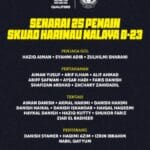
Negeri Sembilan FC is proud to announce that goalkeeper Syahmi Adib and midfielder Haiqal Haqeemi have been called up to represent Malaysia in the AFC U23 Asian Cup Qualifiers 2025, scheduled to take place in Thailand from 1–9 September 2025.

Both players will report for national duty on 17 August, before flying out the next day to join the preparation camp ahead of the crucial qualifiers.

This achievement marks another proud milestone for Negeri Sembilan FC, showcasing the talent and quality nurtured within the squad.

We wish Adib and Haqeemi the very best as they carry the hopes of the nation on the international stage.

For the State, For the Nation! 🟡⚫🇲🇾

Negeri Sembilan FC in the Malaysia FA Cup: A Storied Legacy

1. The Rise of a New Contender (2003)

Negeri Sembilan FC clinched their first-ever Malaysia FA Cup title in 2003. In a dramatic final against Perlis, the match was sealed by a late goal from Everson Martinelli, following a comeback initiated by Effendi Malek. This historic win laid the foundation for the club’s emergence as a force in Malaysian football.

2. Redemption and Triumph in 2010

After years of steady progress — including Semi‑final finishes in 1993, 1999, 2006, and 2009 — Negeri Sembilan once again lifted the FA Cup in 2010.

Facing Kelantan, the final remained goalless through regular and extra time, ultimately being decided in a nail‑biting penalty shootout. Negeri Sembilan emerged victorious 5–4, with goalkeeper Farizal Marlias delivering a standout performance to secure the trophy.

3. Consistent Performers Through the Years

Over the decades, Negeri Sembilan FC has been a familiar contender in the FA Cup, reaching:

  • Semi-finals in 1993, 1999, 2006, 2009, and 2017
  • Quarter-finals in 1997, 2000, 2001, 2004, 2013, and 2023

As of 2024, they reached the Round of 16, reflecting consistent competitiveness in Malaysia’s premier knockout tournament.

4. A Golden Generation and National Recognition

The period between 2003 and 2011 represented a golden era for the club. With standout players such as Shukor Adan, Aidil Zafuan, Zaquan Adha, Hairuddin Omar, S. Kunanlan, Farizal Marlias, and Shahurain Abu Samah, Negeri Sembilan enjoyed sustained success across competitions.

5. Honours at a Glance

CompetitionTitles
Malaysia FA Cup2 (2003, 2010)
Malaysia Cup3 (1948, 2009, 2011)
Malaysia League1 (2005–06)
Charity Shield1 (2012)

Why It Matters

Negeri Sembilan FC’s history in the Piala FA is not just about lifting trophies; it’s about narrating a story of resilience, strategic evolution, and competitive spirit.

Their first triumph in 2003 marked a major turning point; the dramatic 2010 win further solidified their reputation; and continued deep runs in the tournament underscore a legacy built on persistence and passion.

This blend of history and ambition paints a compelling narrative — one that resonates deeply with fans, stakeholders, and anyone passionate about Malaysian football.

Opponent Analysis: PDRM FC Home Piala FA 2025/2026

1. Tactical Identity – Two Faces of PDRM

PDRM FC have shown in back-to-back matches that they can adapt their approach depending on the opponent’s style, alternating between possession dominance and counter-attacking efficiency.

Match vs DPMM – Possession-Dominant Role

  • Possession: 64% — an unusually high share for PDRM.
  • Passes: 500 total (422 accurate), dictating play in midfield.
  • xG: 3.63 vs 1.53 — created more and higher-quality chances.
  • Reason: Early 0–2 deficit (conceded in 2’ & 6’) forced them to push forward, while DPMM sat in a deep block.
  • Tactical Adjustment: Full-backs pushed high, central midfielders (especially Tae-Soo Park) stepped into advanced positions, resulting in his two goals (68’, 72’).

Here, PDRM looked more like a front-foot, high-possession team, but still relied on direct vertical passes and crosses rather than intricate combination play.

Match vs Terengganu – Counter-Attacking Role

  • Possession: 44% — reverted to a compact 5-4-1 low block.
  • Passes: 358 total (291 accurate), focusing on quick transitions.
  • xG: 1.16 vs 3.37 — created fewer chances but were highly efficient.
  • Goals: Both from Bernard Henri Cedric Doumbia (13’, 53’) in fast transitions.
  • Reason: Terengganu’s high pressing and structured build-up limited PDRM’s ability to keep the ball, forcing them to defend deep and hit on the break.

This was the classic PDRM formula — disciplined defending, soaking pressure, and relying on their striker’s clinical finishing.

2. Strengths

a) Finishing Efficiency

  • Across both matches, PDRM scored 4 goals from 17 shots on target — an excellent conversion rate.
  • Doumbia in particular is ruthless, needing minimal touches to score.

b) Tactical Flexibility

  • Can switch between high-possession build-up (vs DPMM) and low-block countering (vs Terengganu) depending on game state and opposition.
  • This adaptability means they’re not one-dimensional, which is rare for teams in their league position.

c) Key Individuals in Decisive Moments

  • Tae-Soo Park: Goal-scoring midfielder with a late-box arrival threat (2 goals vs DPMM).
  • Doumbia: Target man, finisher, and focal point for both counter and possession play.

d) Goalkeeper Impact

  • Ifwat made 14 saves in two matches, including a crucial penalty save vs DPMM that preserved the draw.

3. Weaknesses

a) Vulnerability in Opening & Closing Phases

  • Early collapses: 2 quick goals conceded vs DPMM in first 6 minutes.
  • Late collapse: Conceded 90’ penalty equaliser vs Terengganu.
  • Concentration lapses at both ends of matches have cost valuable points.

b) High Defensive Error Rate

  • 5 errors leading to shots vs DPMM, 6 vs Terengganu — one of the highest among league sides.
  • Mistakes in clearances and ball-handling under pressure invite unnecessary danger.

c) Struggle Under Sustained Pressure

  • Faced 22 shots in both matches — defensive shape often breaks down if pinned in their half for long periods.

d) Limited Creativity in Open Play

  • Even when dominating possession (DPMM match), chance creation relied heavily on direct balls, wide deliveries, and individual runs — less so on coordinated team build-up.

4. Standout Player: Bernard Henri Cedric Doumbia

Stats over the two matches:

  • 2 goals.
  • Match rating: 9.0 vs Terengganu — best on the pitch.

Strengths:

  • Finishing: Sharp inside the box, converts even half-chances.
  • Pace & Power: Stretches defences in transition, holds off centre-backs.
  • Versatility: Works both as a counter-attacking outlet and as a focal point in possession games.

Doumbia is PDRM’s most important asset.

5. Conclusion

PDRM’s back-to-back draws show they are a chameleon-like side:

  • Vs passive teams (DPMM): They can control possession, push high, and create volume in attack.
  • Vs dominant teams (Terengganu): They can sit deep, defend in numbers, and strike quickly on the break.

Path to improvement:

  1. Reduce defensive errors and early-game complacency.
  2. Maintain concentration in final minutes.
  3. Add another creative outlet to ease the burden on Doumbia and Tae-Soo Park.

If these areas are addressed, PDRM can evolve from a dangerous counter-puncher into a balanced, mid-table contender capable of beating any opponent.

Match Analysis: JDT vs NSFC Away Super League 2025/2026

The match between Johor Darul Ta’zim (JDT) and Negeri Sembilan FC (NSFC) was one of the most exciting in recent Super League seasons. For the first time in 4–5 years, a local league opponent managed to score 3 goals against JDT at the Sultan Ibrahim Stadium.

This shows that NSFC under Coach Nidzam is no ordinary side this season, they are capable of challenging other teams provided they maintain consistency and not just perform in one big game.

JDT’s Line-up & Early Mistakes

Under new coach Munoz, JDT rotated heavily, resting Arif Aiman and starting Iker Undabarrena, and Nacho as double pivots, with Sidibe and Oscar Aribas as wing-backs. This overconfidence backfired:

  • Within 30 minutes, JDT were 0–2 down.
  • Coach Munoz had to sub Arif Aiman in early and later replace Undabarrena with Afiq Fazail to regain midfield control.

JDT’s Weaknesses

  1. Midfield Protection – Playing two No. 8 types (Undabarrena & Nacho) left no proper defensive midfielder to cover the high back three or advancing wing-backs. NSFC exploited this gap with fast counterattacks and through balls. Loss of players like Natxo Insa and Hong Wan is felt.
  2. Backline Exposure – Park, Irazabal, and Eddy Israfilov are strong in duels but slow to recover against pace, especially when wing-backs are caught high. Poor tracking awareness let NSFC runners get in behind.
  3. Wing-back Recovery – Oscar Aribas and Sidibe pushed too high and were slow to transition into a back five, leaving the back three exposed.
  4. Goalkeeper Inexperience – Abad (18–19 years old) lacked communication and shot-stopping maturity, needing more time at this level.
  5. Attack Chemistry – Figueiredo and Jairo da Silva are individually good but lack combination play. Jairo also missed a penalty badly.

JDT’s Tactical Fix & Comeback

By 27 minutes, Munoz’s changes paid off:

  • Arif Aiman’s introduction transformed the attack, directly influencing goals via corners and open play.
  • Oscar Aribas moved to left wing-back, assisting a Bergson goal.
  • Afiq Fazail stabilized midfield balance.
  • Bergson vs Jairo for the main striker spot is still undecided.
  • Set-pieces (especially corners) are now a strength under Munoz.

NSFC’s Strengths

  • Courage to play openly against JDT, exploiting their high line.
  • Effective build-up from the back through Alex (on loan from Selangor), the creative midfield maestro.
  • Physical, pacy forwards like Esso and direct, clinical striker Jovan Motika (scored twice).
  • Goalkeeper Azri Ghani made several crucial saves.
  • Flexible defensive transitions, with Wai Lin dropping into a back five when needed.

NSFC’s Weaknesses

  • Protecting a lead: struggled to maintain defensive shape after going 2–0 up.
  • Vulnerable to counters once they lose possession high.
  • Drop in right-wing quality when Selvan was substituted.

Detailed Match Analysis

Scoreline & Flow

  • Final score: JDT 5 – 3 NSFC
  • NSFC shocked JDT with two early goals via fast, direct play, but JDT’s tactical switches turned the tide.
  • It was an end-to-end battle with both teams creating high-quality chances.

Tactical Overview

TeamFormation (approx.)ApproachKey Risks
JDT3-4-1-2 (morphed after changes)Possession-heavy, wing-back width, reliance on Arif Aiman’s creativityMidfield gaps, high line vulnerability
NSFC4-3-3Build-up through Alex, quick vertical passes to pacey forwardsDefensive depth after leading, wing defence when Selvan subbed

Key Phases

  1. Early NSFC dominance – Exploited JDT’s unprotected midfield and high defensive line. Jovan Motika’s direct runs were lethal.
  2. Munoz’s intervention – Early subs brought balance and creativity; Arif Aiman became the game-changer.
  3. Set-piece mastery – JDT scored twice from corners, showing a growing weapon under the new coach.
  4. Endgame pressure – NSFC’s inability to defend deep against sustained pressure cost them the result.

Standout Performers

  • JDT – Arif Aiman (match changer), Oscar Aribas (effective at LWB), Afiq Fazail (midfield control)
  • NSFC – Jovan Motika (2 goals), Alex (creative hub), Azri Ghani (crucial saves)

Key Statistics (based on transcript data & inferred trends)

  • Possession: JDT likely >60% after tactical changes.
  • Shots on target: JDT significantly more after Arif’s introduction.
  • Goals from set-pieces: JDT 2, NSFC 0.
  • Counterattack goals: NSFC 2 early in first half.

What This Means Going Forward

  • JDT – Must fix midfield screening and high-line vulnerability before AFC Champions Elite competition; cannot rely solely on Arif Aiman.
  • NSFC – Encouraging attacking display but needs better defensive game management to hold leads against elite opposition.